How to Sell a Gas Station: A Complete Guide
13 min read
Share this post


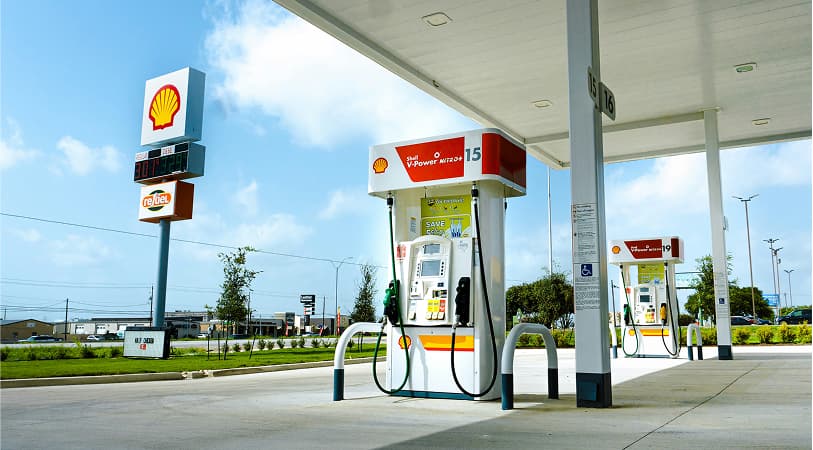
Running a gas station comes with its challenges. Between slim profit margins on fuel sales and the responsibilities of meeting environmental regulations, managing a station can become more demanding as the years go by.
Maybe you’re ready to retire or are looking for capital for your next business venture. Whatever your reason, choosing to sell your gas station isn’t like any other business transaction. Fuel agreements, environmental compliance, fluctuating margins, and real estate values all play a role in the selling process.
While gas station sales are more challenging than most businesses, Dealonomy provides sellers with a frictionless experience when they sell their business.
Understanding the Gas Station Market
The gas station market is experiencing growth driven by increased interest in sustainability methods, a customer base with increasing disposable income, and a product that at least 92% of Americans use regularly.
Let’s dive into the numbers and learn what’s driving the gas station industry, including trends, conditions, and demands.
Current Market Conditions
The gas station industry has experienced a compound annual growth rate (CAGR) of 0.5% over the past five years. It’s no surprise that the COVID-19 pandemic disrupted gas stations. However, due to growing stability of supply chains and technological advances, gas stations are on a trajectory for growth.
Industry Specific Trends
Sustainability is a growing concern for people in younger generations. That means as younger people start driving, they’ll be seeking sustainable options for their fuel. This is reflected in the sustainable trends occurring in gas stations.
In 2025 and beyond, gas stations need to continue to venture into new and expanding service options, including:
Developing grocery options: With a higher demand from customers to provide healthy food options, and the typical road snacks.
Diverse payment options: Tap, swipe, insert, and cash options are important for customers, and gas stations need to adapt to these customer expectations.
Sustainability: As people care more about sustainability, it’s important for gas stations to adapt to this by adopting more diverse fuel options.
EV charging: Electric vehicles are here to stay. For gas stations to succeed, they need to consider whether to provide EV charging stations.
Buyer Demand
Buyers interested in gas stations fall into a few categories, each with their own reasons to want to purchase.
Individual entrepreneurs: Family-owned operators look for businesses with a stable cash flow. These buyers are typically looking for a gas station with a nicer-than-average convenience store. These typically produce higher than average profit margins. Buyers in this category see a gas station as a business and a lifestyle investment.
Chain investors: Multi-station businesses are the primary purchasers of gas stations. These larger businesses are looking for portfolio-expanding opportunities, and they know the gas station industry well. These buyers are looking for stations that are well-positioned both locationally and financially.
It’s important to understand which buyer your station will likely attract. From there, you’ll be able to position your marketing to better attract them.
Typical Sale Multiples
Gas station sale multiples are an easy way to get a quick valuation for your business. Being the preferred method for business owners, they provide a straightforward way to estimate value by comparing your business’s financial performance to recent sales of similar businesses.
The process is simple. All you have to do is multiply your business's revenue by the appropriate sales multiple. The most difficult part of this process is finding the appropriate sales multiples. Lucky for you, we’re here to help.
Gas station multiples exist between 0.13x and .61x. On average, gas stations sell at a revenue multiple of 0.44x. This means your gas station could be valued at .44 times its yearly revenue.
Preparing Your Gas Station Business for Sale
Before you start the process of selling your business, it’s important to get everything in order. Buyers now have more rigorous standards than ever before.
Follow these steps to ensure your business is ready to sell.
Collect Your Finances
Before selling your gas station, it’s important to have all your ducks in a row. Get any and all documentation together, including:
Profit loss statements
Balance sheets
Cash flow statements
Tax returns
Accounts receivable and payable
This will help you find the true value of your business and help the buyer feel more comfortable with the purchase.
Deal With Any Legal Issues
Hopefully, your gas station doesn’t have any outstanding legal issues or fees. However, if you do, you should clear up those issues before listing your business.
No buyer wants to inherit legal issues, such as environmental fees, employee disputes, or city-related issues. Pay your dues and rectify any issues that caused the legal problems.
Clean Up
Apart from finances and compliance issues, clean up your gas station. Gas stations are not known to be bastions of hygiene, but if you clean up your gas station before listing it will be more marketable for buyers.
Power wash the building and fill up stations
Replace broken or unsightly amenities
Fix any broken equipment
Valuation Methods for Gas Station Businesses
Gas stations can be tricky to valuate. However, with a combination of traditional methods and some industry-specific strategies, you can get an accurate depiction of what your business is worth.
Market
Market-based valuations provide a benchmark by comparing your business to similar businesses that have recently sold. This gives buyers a good understanding of what to expect and helps them feel more comfortable with the sale price.
Industry multiples apply a standard multiple to the business’s financial metrics to estimate the value of the business according to industry standards. This method is easy to understand, but if you have specialized assets, those will need to be considered outside of the multiples.
EBITDA
Earnings before interest, taxes, depreciation, and amortization (EBITDA) is a widely used financial metric that provides a clear picture of the company's profitability by stripping expenses that may vary based on ownership, financing decisions, and accounting methods.
Asset-based
This approach focuses on the net assets of a business and is suitable for asset-heavy businesses. Gas stations have a lot of specialized equipment and property considerations.
Underground tanks and filling stations are unique to gas stations and should be considered.
Book Value Method: Calculate the net asset value by subtracting total liabilities from total assets.
Liquidation Value Method: Estimates the net cash that would be received if all assets were sold off and all liabilities were paid immediately.
Cost-Based Approach: Estimates the expenses necessary to recreate the business, focusing on the replacement cost of its tangible assets.
Gas Station Specific Valuation
There is more to consider when valuing a gas station than most other businesses. When valuating any business, you need to find the industry-specific considerations that affect the profitability of the business. For gas stations that includes:
Fuel Margins: You know more than anyone that the profit gas stations receive from fuel sales is thin. However, the volume can significantly affect the gas station’s value
Convenience store performance: Because fuel margins are often low, many gas stations make up that difference through convenience store sales. Retail items, beverages, and road snacks are often the revenue keeping the business afloat.
Real estate value: Location is everything, and with the necessary traffic changes and the necessary built-in equipment, the real estate value of the gas station can increase the business’s value a lot.
What’s the Benefit of Professional Valuation for A Gas Station?
It’s difficult to find the value of your business on your own. That’s why it’s recommended to find help.
Professional valuation services will provide an unbiased understanding of what your business is truly worth.
Accuracy: The numbers don’t lie. However, knowing what numbers to use and where to find them is difficult if you don’t know what you’re looking for.
Negotiation Power: A seller-created valuation won’t have as much negotiation power as a professionally made valuation. A professional valuation will let you negotiate with power.
Leverage Dealonomy’s frictionless selling platform by listing your business for sale.
Marketing Your Gas Station Business
When marketing your gas station for sale, the first step is to highlight its strongest selling points. Buyers want to see clear evidence of profitability, so preparing detailed financial records, fuel sales volumes, and convenience store performance is essential.
Leverage What Makes Your Gas Station Unique
You can leverage your gas station's location if it’s near a freeway, a growing community, or a traffic hub. However, there is so much more you can do, no matter where your gas station is located.
You should also highlight the convenience store portion of your business. Due to changing trends and the nature of the gas station industry, the convenience store portion of gas stations ends up being one of the most financially beneficial portions of the business.
List Your Gas Station on Dealonomy
It is possible to market your gas station for sale independently, but it’s an uphill battle. Instead, it’s better to work with a broker or list your business on Dealonomy.
Dealonomy offers a Good Deal Only marketplace for buyers, and we work with sellers to create a marketing package that attracts vetted and qualified buyers.
You’ll receive direct buyer connections that maximize the potential value of your business.
Navigating the Sales Process
The sales process can be confusing for those who don’t interact with it often. The good news is, we know business sales like the back of our hand.
Every business sold on Dealonomy follows the 4-phase process:
Preparation (1-2 Months)
Marketing the Business (3 Months)
Negotiation and Due Diligence (3 Months)
Closing and Transition (1-3 Months)
Preparation
This initial phase involves organizing essential documentation such as financial statements, business operation documentation, and developing a marketing strategy.
Dealonomy provides a free valuation report to find your business’s value and saleability. This will help us determine strategy and the path going forward.
Marketing the Business
Once we’ve established a relationship, we’ll engage with potential buyers and manage any inquiries. We alert our premium buyers 10 days before releasing the listing to our broader network.
During this time, we do all the work to find the right buyer for your business.
Negotiation and Due Diligence
After receiving a letter of intent (LOI), we move into negotiation and due diligence. During this phase, we evaluate offers, negotiate terms, and allow buyers to conduct thorough due diligence.
A Letter of intent specifies the proposed price, payment structure, and length of time of due diligence.
The due diligence process is when a potential buyer does a deep investigation of financials, operations, contracts, and risks before closing. The seller also uses this time to evaluate the deal on their part.
Your deal team will guide you through any facilitation, site tours, and financing approval.
Closing and Transition
Lastly, we move into the final stage of the selling process. During this stage, we finalize legal agreements, transfer ownership, and facilitate a smooth transition to the new owner.
Before hanging over the keys completely, you, your buyer, and Dealonomy’s team of facilitators will outline a transition plan and prepare documentation while proactively offering training and support to the new owner.
Sales Considerations for Gas Stations
Gas stations require a higher level of due diligence due to environmental regulations. This makes the due diligence process longer than most businesses. This also includes environmental inspections and a fuel supplier agreement.
Common Challenges While Selling a Gas Station
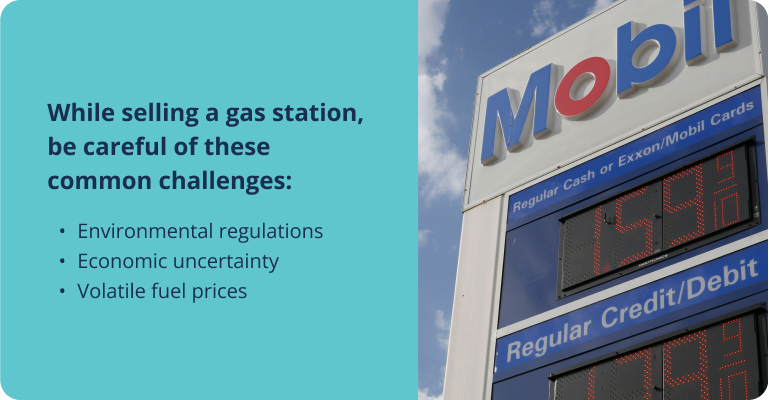
The gas station market is always changing. Prospective sellers want to know how much value they’re getting from their purchase. Sudden market changes caused by world events and volatile pricing are challenges that gas station sellers need to handle.
Environmental Regulations
Gas stations need to maintain important regulations. If your gas station is having difficulties with legal issues, then selling it will be even more difficult. As a seller, it’s up to you to make sure your business complies with environmental, safety, and zoning jurisdictions.
Buyers will want reassurance that the business they’re purchasing meets the minimum standard for compliance. Before looking for a buyer, make sure any outstanding legal or compliance issues have been dealt with. You can prove this to buyers by delivering any paperwork or documentation.
Economic Uncertainty
Economic uncertainty, like inflation, employment rates, and worldwide economic events, all influence the performance and value of gas stations. Owners can mitigate this uncertainty through food sales.
Volatile Fuel Prices
Volatile fuel prices can change at a moment's notice. Profit margins can suddenly change, making it more difficult to find and maintain a buyer.
To successfully sell a gas station, sellers need to provide thorough market analysis, flexible pricing strategies, and pre-existing risk mitigation strategies. Every gas station has to deal with volatile gas prices. Prove that your business is set up for success through proven financial success.
Sell Your Gas Station For Free
Choosing to sell your business can feel overwhelming, and you may be tempted to go with the first buyer. It may seem like an easy exit is what you need, but that will leave you with less money than your business is worth.
If you want the full value of your business, you likely need professional help. The issue? Traditional professional help can cost a lot of money. The typical commission for selling a business is anywhere from 5%-15% of the business’s sales price.
Dealonomy is a high-tech, high-touch business selling and buying platform that offers a 0% commission and no success fee. We are the only online marketplace where qualified business owners can sell their business in a competitive environment with thousands of buyers and experienced advisors to assist every step of the process at no cost.
We’re free for sellers, so request a free business valuation today.
FAQ
How Long Does it Take to Sell a Gas Station?
On average, businesses sell within six to twelve months of listing. However, this is dependent on the size and complexity of the business.
Gas stations tend to take a bit longer than other businesses due to the high level of complexity of the sale. This comes from the compliance and legal considerations, as well as the required complex pricing and valuation strategies.
What Documents Will I Need To Sell My Gas Station?
Buyers will want to review financial statements, tax returns, fuel supply agreements, environmental reports, maintenance records, and property leases or deeds. Having accurate, up-to-date records ready builds buyer confidence and can help you close the deal faster.
Are There Tax Implications of Selling a Gas Station?
After you sell any business, you incur tax implications. Capital gains taxes on potential depreciation recapture and appreciation are the taxes you should know about.
The professionals at Dealonomy are ready to walk you through the implications and how to mitigate and handle the regulations.
How can I attract serious buyers?
Attracting qualified buyers, ensuring your station is well-maintained, your finances are organized, and your asking price is competitive.
Should I use a business broker to sell my gas station?
Working with a broker to sell your business is considered ideal for most business owners. However, there is a better option than selling with a broker.
Dealonomy empowers sellers to get the most value for their business by offering incentives found nowhere else: a 0% success fee and a 90-day guarantee.
List Your Gas Station For Sale
If you’re looking for a place to sell your gas station, you’ve found it.
Usual business selling models would ask for commission and success fees. This can range anywhere between 5-15% of the selling value. This is usually tiered, so if your business is worth a lot, you’ll be spending the top percentage for your broker.
Dealonomy offers a frictionless solution for business buyers that includes a 0% commission fee and a 90-day guarantee. Meaning if you don’t receive a serious letter of intent from a vetted buyer within 90 days, we will pay you $10,000.
We’ve streamlined the selling process with proprietary software that saves you time and money. You’ll have access to a dedicated team of experts to guide your business toward a sale from day one to closing day.
Leverage the benefits of Dealonomy and receive the full value of your business.
Share this post